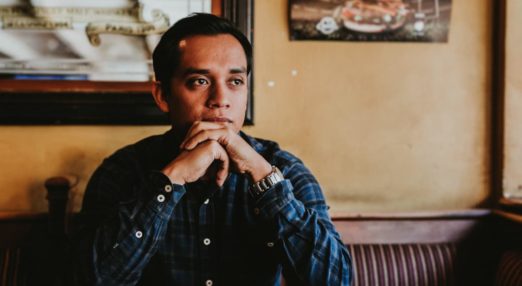
Anna’s Story
Dr Agnieszka Anna Pytlowana is a Clinical Psychologist who understands, both professionally and personally, the impact of bereavement and grief. We're incredibly grateful to Anna for sharing her experience and insights with us.
I grew up in Hungary and then Poland in a Catholic environment. Looking back, I don’t remember death, dying or grief ever being talked about openly with me.
When my paternal grandfather died, I was around 12 years old. I knew he was in hospital, but I don’t remember many conversations with the adults around me about what was happening. The strongest memory I have is seeing my dad cry at the funeral, as it was the first time I’d ever seen him cry.
After that, death and grief continued to be topics that were not really discussed at home nor at school. This despite many members of my family having died during the WWII, and my maternal grandfather when my mum was only 2.
So when my dad died suddenly in 2015, I found myself facing bereavement and grief without really having the language for it.
I didn’t have a language for grief
I was travelling at the time and I had spoken to my dad on the phone that morning. Later that day, I learned that he had died unexpectedly because of a cardiac condition that had not been fully diagnosed.
We had a very close relationship, so his death came as an enormous, paralysing shock.
I remember feeling that I didn’t really have a language to express what was happening. There wasn’t much to default to. I didn’t know how to make sense of it or how to talk about it.
I was abroad, on a small Caribbean island, when my dad died and couldn’t get back in time for the funeral. Because of the traditions where my parents lived (Poland), the funeral happened very quickly and I reached my dad’s grave a couple of days after the funeral.
There were lots of different layers to navigate, including guilt for not being at the funeral, and religion. While faith was incredibly important to my mum, I hadn’t seen myself as religious since turning 15 or so, and so our attempts to make sense of our bereavement had different frames of reference.
When Grief Became Physical
When I finally went to the cemetery (few days after the funeral), I saw my dad’s grave from a distance and my body froze. I couldn’t breathe properly. It was the only time in my life that I have experienced what I would describe as a panic attack.
Looking back now, I recognise that grief can be incredibly physical. That physical side of grief showed itself again when I returned to work. I didn’t tell anyone what had happened. I sat down at my desk, opened my laptop and suddenly burst into tears.
I had convinced myself that carrying on and working hard would make my dad proud, and I wanted to be close to him in that way. But my body was very clear in saying “No. You’re not ready.”
Finding My Own Ways of Coping
I was frightened by having so much time and space to sit with my feelings, so I kept moving. Running became really important to me. I spent time in nature and I travelled, something my dad had always loved.
Looking back now as a psychologist, I understand this through the idea of continuing bonds, but at the time it was much more intuitive than conscious. I was naturally looking for things that gave me comfort and closeness to him.
Over the years, I have found different ways of continuing that relationship. I write what I call “change letters” rather than goodbye letter/s to my dad, because I never wanted to say goodbye. The relationship had changed, but it hadn’t ended.
I still talk to my dad in my mind and lean on everything I know about who he was. Today, one of the ways I feel most connected to my dad is simply by talking about him. He existed, he had a massive impact on my life and I am still connected to him.
Why Support Matters
When my dad died, I wasn’t in a place where I would have reached out for support. I had this narrative in my mind that, because I was training to become a psychologist, I should be able to figure it out by myself.
Looking back, I see that completely differently.
Over the years, both personally and professionally, I’ve come to appreciate just how important organisations like Cruse Bereavement Support are. I’ve signposted many people to Cruse because I know how compassionate and valuable that support can be.
When my book was due to be published, it felt important to honour the work Cruse does. Speaking with Cruse volunteers, I was struck by their compassion, wisdom and insight, and it felt deeply meaningful to share both my lived experience and professional knowledge with people who dedicate so much of their time to supporting others through bereavement.
There is no right or wrong way to do bereavement
What I’ve come to understand, through both my lived experience and my professional training, is that grief is one emotion within the bigger process of bereavement.
Bereavement doesn’t have an end point. It is a journey, and it includes a variety of emotions. For me, that has included sadness, anger, relief and even joy.
I strongly believe there is no right or wrong way to do bereavement. We do what we can with what’s available to us at the time.
Some people cry. Some people pray. Some people travel, party or exercise. Some people visit graves. Others don’t. None of those ways are wrong or better than others. It is about making that journey yours and what it needs to be for you.
You can order Anna’s book ‘Coping with Bereavement: Practical Strategies to Empower and Support You’ here
One of the wonderful Cruse volunteers asked me during our webinar, whether I had written a Change Letter to my dad recently. The answer was no, but I have since:
Dear Dad,
Wow, 2026. So much is happening. Honestly, I still can’t quite believe you died over 10 years ago. I am so grateful that I can clearly remember your voice, smell of your aftershave and what you looked like at various points of my life.
Guess what?! I have been brave and wrote about coping with bereavement. It is a homage to your bravery and ambition, as well as your deeply embedded drive to support others and help them continue to reach their potential.
I continue to feel so lucky to be your daughter. I definitely idealise you less than when I was a child, which helps me to see your beautiful humanity in its entirety.
Oh exciting things! I am really enjoying latin dancing again and it is such a visceral way of feeling your presence..your emphasis on a straight back, good frame and the dance partners complementing each other’s way of being on the dance floor. Oh and and and…I thought myself some more French (with the help of some amazing people!) and recently passed an exam in it. I take you with me every time I travel to France; I know just how much you loved that culture, language and food…(yes, I am still vegan! Don’t frown ;))
I love you, Your Daughter
-
Remember someone
We’re here to help you make a lasting and meaningful tribute to those you love and miss.