
Charli’s Story
"I’m still figuring all of this out myself. I definitely haven’t 'nailed' anticipatory grief. But I do think we need to talk about it more openly."
When I was diagnosed with primary breast cancer in 2016, I honestly thought I’d ticked the cancer box and that was it. I’d had surgery, and because my chance of recurrence was considered really low, I didn’t have chemotherapy.
Unfortunately, my cancer came back.
By the time I was referred, it had spread throughout my bones, liver and lungs. I was told it was incurable and that it would probably be what I die from. I’m now two years into living with secondary breast cancer.
Being honest as a family
My daughter was 10 when I was diagnosed, and from the beginning, my husband and I decided to be honest with her. We felt that if we weren’t truthful now, she might not trust what we told her later on. We explained that my cancer isn’t curable, but that people can live with it for years, and we update her after each scan.
I think one of the hardest things for children is not wanting to upset the people they love. However much we reassure her, I know there’s still a part of her that worries about saying the wrong thing or making us sad. She will also be navigating anticipatory grief – grieving someone before they’re gone. That’s why support outside the family matters so much. Having somewhere safe to talk, without feeling like you need to protect everyone else, is incredibly important.
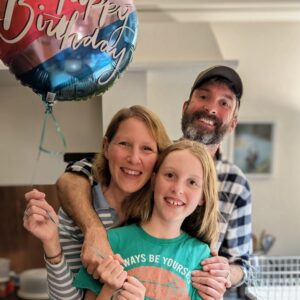
As a mum, your role is to guide your child
For me, anticipatory grief is knowing that I’m going to cause heartbreak for the people I love most. Not just after I die, but now, and all the way through until then.
As a mum, your role is to guide your child through difficult times. But this will probably be the hardest thing my daughter ever experiences, and I won’t be there for her. That’s the part that breaks my heart the most.
You’re not meant to know when you’re going to die. Most people get to live without that knowledge sitting in the background all the time. When you do know, it changes everything.
Even lovely moments can feel complicated because there’s always another layer underneath them. You can have a brilliant family day out, but in the back of everyone’s mind is the thought that one day these memories will matter in a different way.
Coping through writing and preparing
One of the ways I’ve tried to cope is by writing. I originally tried writing goodbye letters for my daughter, but I found it unbearable because all I could picture was her reading them in tears, and me not being there to comfort her.
So instead, I wrote a children’s book. The main message is that your heart remembers the love you’ve been given, and that love stays with you forever.
I’ve also written short stories about things like how her dad and I met and the day she was born. I wanted her to know my side of those memories too.
Knowing there will be support for my daughter and husband after I’m gone gives me some peace of mind. Charities like Cruse, who can help them to navigate grief.
Acknowledging experiences can help
Something I’ve learned through this experience is that people often feel they need to ‘fix’ things. They’ll say things like, “At least you have time to plan” or “The cure could be around the corner.” I know it comes from a good place, but sometimes what I actually need is for someone to simply say: “this is really unfair” or “this is rubbish.”
Just acknowledging the reality of it helps.
People sometimes say that having time to prepare must make things easier, but I don’t think there’s a perfect way to lose someone. Knowing it’s coming doesn’t make it easier, it just means you carry the emotional weight for longer.
I’m still figuring all of this out myself. I definitely haven’t ‘nailed’ anticipatory grief. But I do think we need to talk about it more openly.
Sometimes people don’t need positivity or solutions. Sometimes they just need someone to sit beside them and acknowledge that what they’re going through is incredibly hard.